
GFDRR · 20th Anniversary · 2006–2026
From Responseto Resilience
Seven shifts that reshaped how 140 countries prepare for, finance, and withstand disasters.
Video credits: Bangladesh: Somogro Bangladesh via Pexels Nigeria: This Vikto via Pexels Porto Alegre: Blackboxguild via Adobe Stock Türkiye: World Bank
In September 2006, the Global Facility for Disaster Reduction and Recovery (GFDRR) was established, born out of a mission to help build a world that is more resilient to natural hazards.
In the two decades since, the frequency and severity of disasters have only continued to rise, driven by the combined pressures of climate change, environmental degradation, and unplanned urbanization. In 2025, global losses from natural hazards reached a staggering $224 billion, with around 17,200 lives lost.
Yet even as the challenges remain immense, GFDRR’s mission of a more resilient world is closer to reality today. Since 2006, 140 countries have drawn on the facility’s support to move from reactive crisis management to deliberate resilience-building, by strengthening policies, systems, and institutions that reduce risk, maintain essential services, and enable faster, smarter recovery.
As confirmed by the World Bank Group’s Independent Evaluation Group (IEG), GFDRR played a key role in driving those advancements. In particular, the facility has played a catalytic role in translating global knowledge into scalable and replicable solutions and informing billions of dollars in World Bank financing for resilience and disaster management.
In fiscal year 2026, each dollar disbursed by GFDRR informed $157 in development financing, illustrating the facility’s ability to influence much larger investments.

© GFDRR / World Bank  VISIT LINK
© GFDRR / World Bank VISIT LINK

© GFDRR / World Bank VISIT LINK
© GFDRR / World Bank VISIT LINK

© GFDRR / World Bank VISIT LINK
© GFDRR / World Bank VISIT LINK
In commemoration of GFDRR’s 20th anniversary, this immersive story takes a closer look at 20 of the most compelling stories of resilience-building from the field, the facility’s role, and how this progress toward a more resilient world is protecting jobs and livelihoods.
These stories span seven areas where the practice of disaster risk management has evolved as part of the global shift from disaster response towards preparedness and risk reduction — a sea change in which GFDRR has played a consequential role as confirmed by IEG.

© GFDRR / World Bank Group
© GFDRR / World Bank Group

© GFDRR / World Bank - Photo: World Bank Group
© GFDRR / World Bank - Photo: World Bank Group

© GFDRR / World Bank - Photo: World Bank Group
© GFDRR / World Bank - Photo: World Bank Group
Country-led advancements in resilience in every part of the world have delivered a triple return: saving lives and avoiding losses, protecting jobs and economies, and generating social and environmental benefits.
Volunteers working together to clear debris after a large landslide in Indonesia. Photo by Ludwig Kwan via Pexels
Volunteers working together to clear debris after a large landslide in Indonesia. Photo by Ludwig Kwan via Pexels
For example, in Tajikistan, over 750,000 people, nearly half of whom are women, benefitted from more resilient infrastructure, including reconstructed bridges which have substantially reduced travel time and improved access to services and markets for rural communities.
Meanwhile, in Bangladesh, over 720,000 people have benefitted from coastal infrastructure which has not only reduced flood risk, but also improved jobs and livelihoods prospects in the agriculture sector.
Be it in Tajikistan, Bangladesh or elsewhere, even as GFDRR support played a role, these success stories reflect people and communities’ own determination to build resilience in the face of intensifying risk, and of countries enacting policies and strengthening capacity to achieve risk-informed development.
From Risk Data to Decision Intelligence
- PlanSmart (Philippines)
- Global Rapid Post-Disaster Damage Estimation (GRADE)
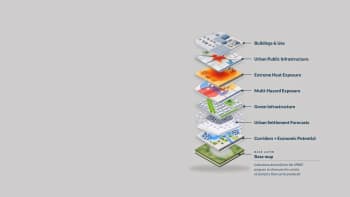
- Smart Parcel Atlas for Resilient Cities (SPARC)
GFDRR was founded in the aftermath of the Indian Ocean tsunami of 2004, a watershed moment for disaster management.
One way that this tragedy fundamentally transformed disaster management work is that it prompted a shift in how countries think about disaster risk — from mainly producing risk information to also considering how it is used to inform decision-making.
Mapping Tsunami Inundation North of Phuket
Dec. 2002 baseline vs. Dec. 2004 elevation-based inundation model
GFDRR has played its part in cementing this shift, harnessing advances in data, artificial intelligence, probabilistic risk modeling, and digital technologies to enable better, cheaper and more decision-ready methods for collecting, assessing, and communicating risk data and information.
Tools and analytics like the City Scan and the Nature-Based Solutions (NBS) Opportunity Scan developed by the facility have provided governments, communities, and the private sector with actionable data and information to make decisions about how to prepare for and reduce the risks from the next disaster.
GFDRR has also supported countries in building the institutional arrangements needed for effective, risk-informed decision-making.
In Practice
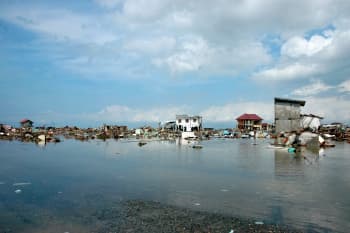
The Philippines is among the first countries to automate risk-informed recovery planning. After a disaster, local governments can draw on and customize preformulated plans to develop recovery and reconstruction plans more quickly and efficiently.
Philippines · Digital Recovery Planning
PlanSmart Philippines
Over 500 local government units and national agencies have prepared recovery and reconstruction plans with PlanSmart, a digital application that generates plans for disaster scenarios from risk and hazard data.
In Practice
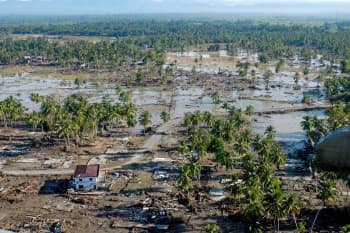
Combines risk modeling with census, survey, satellite and social media data to estimate damage, often within 2–3 weeks of a disaster—informing financing decisions such as access to the IDA Crisis Response Window.
Global · Rapid Damage Estimation
Global Rapid Post-Disaster Damage Estimation (GRADE)
Used in about 80 disasters across around 60 countries since 2015 to give governments and partners a fast, data-driven estimate of what was damaged, where, and at what scale.
In Practice
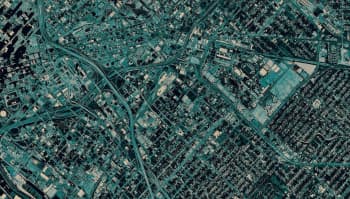
Of the buildings SPARC identified in flood-prone areas of Juba, about 1,200 were built in the last 12 months—and the city now has its first consolidated digital urban baseline.
Juba, South Sudan · Urban Intelligence
Smart Parcel Atlas for Resilient Cities (SPARC)
A World Bank Group initiative supported by GFDRR. It turns satellite imagery, global datasets and city data into insights on buildings, infrastructure, urban growth and risk. Deployed in Johannesburg, Kigali and Juba.
Embedding Risk and Resilience in Policy and Planning
Insights from the Republic of the Marshall Islands, Kenya, and Morocco
GFDRR’s founding also came on the heels of the Hyogo Framework for Action (2005−2015) which called for “the development and strengthening of institutions, mechanisms and capacities at all levels … that can systematically contribute to building resilience to hazards.”
Taking their cue from the first comprehensive blueprint for global risk reduction, countries have since made significant strides in embedding risk and resilience considerations into planning and policy frameworks, as well as regulatory processes.
GFDRR has been on the frontlines of making that happen, supporting national and subnational governments to strengthen institutions, establish legal and regulatory foundations for disaster risk management, and integrating disaster and climate resilience into sectoral strategies.
This includes systematically using data and analysis on current and future hazards, exposure and vulnerability to guide decisions and investments which ensure the integration of risk information into infrastructure sectoral development and territorial planning processes.
In Practice
The National Building Code Act of 2025 also set the stage for a formalized building permitting process, another first. To date, one permit has been issued, for a resilient government facility.
The Republic of the Marshall Islands · Building Regulation
Strengthening the Republic of the Marshall Islands’ building regulatory framework for resilience
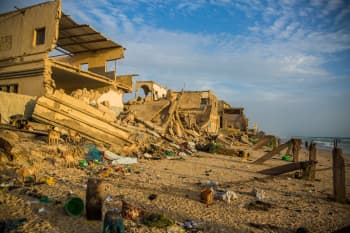
Under the RMI Urban Resilience Project, GFDRR and the World Bank have supported the implementation of the National Building Code Act of 2025, which paved the way for regulating climate and disaster resilience standards through the country’s National Building Code, a first in the country’s history.
In Practice
The plan sets out flood-risk options under three scenarios (no further investment, lower ambition, higher ambition), combining gray infrastructure, nature-based solutions and non-structural measures.
Kenya · Territorial Planning
Territorial planning for resilience: Kenya’s integrated approach in the Athi River Basin
Kenya has developed a strategic resilience plan for the Athi River Basin, integrating land use planning, nature-based solutions, and targeted infrastructure investment to address the drivers of flood risk. The government used co-design workshops to shape the plan with national and county institutions.
In Practice
In Fez and Mohammedia, rapid diagnostics and stakeholder workshops produced 2022–2027 action plans: a roadmap toward becoming safer, greener, more resilient and more inclusive.
Morocco · National & City Strategies
Advancing national and city-level resilience strategies in Morocco
Morocco developed its first National Disaster Risk Management Strategy (2020–2030). Two cities, Fez and Mohammedia, have also developed urban resilience strategies to advance a holistic and integrated approach for mainstreaming DRM at the city level.
Infrastructure Built to Last, Not Just Today
Insights from Türkiye, Tajikistan, and Mauritania
The Hyogo Framework was succeeded by the Sendai Framework for Disaster Risk Reduction (2015-30) which emphasized even more strongly the need to ensure the resilience of critical infrastructure to natural hazards.
The Lifelines report found that on average the net benefit of investing in more resilient infrastructure in low- and middle-income countries would yield $4 in benefits for each $1 invested.
Recognizing this, countries have been making concerted efforts to ensure that their infrastructure is built to last for the long-term, including designing structures that adapt to and mitigate climate impacts and natural hazards and using advanced technologies and innovative design principles.
GFDRR has been supporting these efforts, with a strong emphasis on ensuring that interventions look beyond each individual asset and build more resilient systems and networks.
Another emphasis for the facility is to support countries in planning and managing disruptions — for instance, by ensuring that industries essential for jobs and livelihoods can remain in operation even after a disaster.
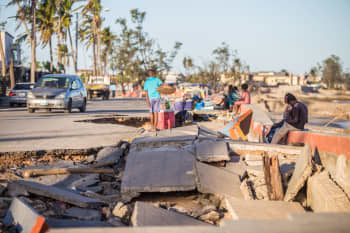
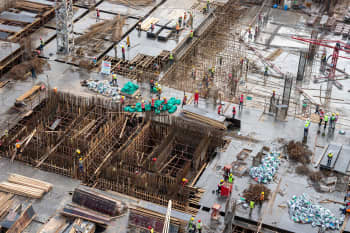

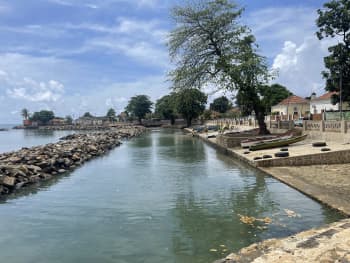
In Practice
Built to Türkiye’s 2018 seismic code, in line with international earthquake engineering standards, the schools provide safer, more resilient education.
Türkiye · Seismic-Resilient Schools
Building safer, more resilient schools in Türkiye
In Türkiye, 62 schools, representing over 1,600 classrooms, were built to withstand seismic risk. Each of the 24 schools located in areas affected by the 2023 earthquakes and aftershocks survived. Four of the 24 schools provided temporary shelter in the aftermath of the disaster.
In Practice
The bridges improved connectivity for remote rural communities, where several replaced structures out of service for years, and on key trunk highways such as the main road to China. Travel times fell substantially and access to services and markets improved.
Tajikistan · Resilient Bridges
Building resilient bridges in Tajikistan
17 bridges in Tajikistan have been reconstructed to be resilient. Four years after the 17 bridges were reconstructed, all have remained operational despite extreme weather.
In Practice
The Frontline Scorecard, a rapid diagnostic tool built on publicly available data and prior assessments, helped identify gaps. Its findings informed the $70 million Mauritania Health System Project.
Mauritania · Resilient Health Systems
Building resilient health systems for Africa
Informed by the Frontline Scorecard, a rapid health system resilience diagnostic tool, 40 health facilities in Mauritania have been retrofitted to adhere to resilient standards, ensuring continuous access to health services for local communities.
Cities & Communities Working With Nature, Not Just Against It
Insights from Mozambique, Senegal, Vietnam, and Bangladesh
Disasters over the past two decades have put the spotlight on the often untapped promise of nature-based solutions. For one, Typhoon Haiyan in the Philippines back in 2013 illustrated how mangroves can slow storm surges, thus mitigating damages to coastal communities.
Drawing on these experiences, countries have been increasingly protecting and strengthening natural systems like forests and wetlands to enhance resilience. When combined with traditional infrastructure, nature-based solutions can cut costs, extend asset lifespans, and boost economic, social, and environmental benefits.
GFDRR has been a leader in helping cities work with nature, placing an emphasis on ensuring that nature-based solutions are part of a comprehensive and integrated approach to resilience. The facility has helped identify optimal investments in more than 100 cities across 40 countries.
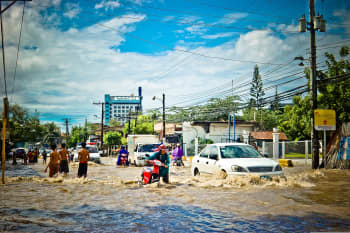
In Practice
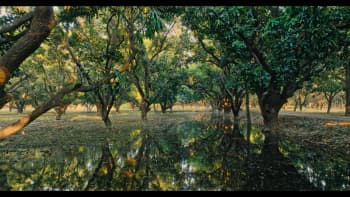
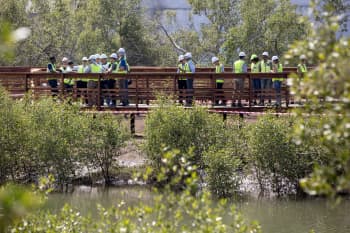
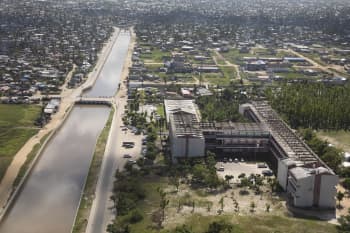
The 17-hectare Chiveve River park restores the river’s stormwater retention role by rehabilitating degraded mangroves and native flora, while adding pedestrian routes, a local market and public spaces.
Mozambique · Nature-Based Solutions
Turning to nature for a more resilient Beira
Flood risk for 50,000 people in Beira, Mozambique has been reduced following the creation of a 17-hectare urban park along the Chiveve river which restored the river’s flood retention function by rehabilitating degraded mangroves and native flora.
In Practice
A nature-based solutions scan for Dakar and Thies (2023) is feeding new drainage master plans, using wetlands and lakes as water retention basins. Officials report much lower operations and maintenance costs.
Senegal · Urban Flood Management
Transforming urban flood management in Dakar, Senegal
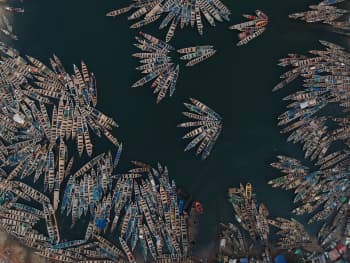
Approximately 420,000 people have benefitted from flood resilience investments in Dakar, Senegal, including drainage infrastructure. Nature-based solutions are now being incorporated into the investments, for example, using wetlands and lakes as water retention basins.
In Practice
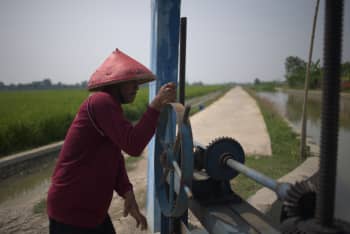
A ring embankment of sluice gates, ship locks, upgraded canals and elevated roads protects the 2,700-hectare urban core. In October 2023, its tidal sluice gates held back the swollen Can Tho River.
Vietnam · Flood Defense
Building a flood defense system in Can Tho City, Vietnam
More than 420,000 people in Can Tho, Vietnam are being protected from flood risk through the establishment of a flood defense system consisting of gray infrastructure and green corridors. 60 sensors have also been installed, providing local authorities with real-time flood monitoring capabilities.
In Practice
Ten coastal polders were rehabilitated, protecting over 65,000 hectares. Afforestation across 700 hectares, a cost-effective nature-based solution, amplified the flood protection.
Bangladesh · Coastal Protection
Strengthening flood resilience in coastal Bangladesh
Over 720,000 people in Bangladesh now live in more flood-resilient communities following upgrades to the country’s coastal protection infrastructure. Afforestation, or the planting of forest in an area that previously had no tree cover, amplified the flood protection effects of the upgrades.
Planning to Pay for Disasters, Before Rather Than After
Insights from Jamaica and Malawi
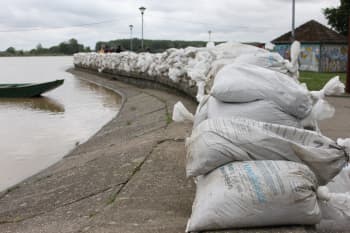
Yet even as countries have been advancing investments in resilience-building such as nature-based solutions, there has also been increasing recognition of the vicious cycle which sees disasters increasing countries’ fiscal stresses, which in turn weakens a government’s ability to invest in resilience.
With countries often reliant on borrowing to finance post-disaster recovery, disasters have been shown to increase public debt by up to 11% of GDP on average.
In response, countries have embraced pre-arranged disaster risk financing strategies which draw on various instruments to form a layered safety net, enabling faster, more predictable access to financing for disaster recovery.
GFDRR has played its part, as underscored by a recent IEG evaluation. The facility has been instrumental in helping countries develop policy and institutional frameworks which enable them to access the catastrophe deferred drawdown option (Cat DDO), a pre-arranged credit line offered by the World Bank.
GFDRR support is aligned with the Bank’s Crisis Preparedness and Response Toolkit which provides more flexibility to help countries put in place contingent resources such as the Cat DDO.
In Practice
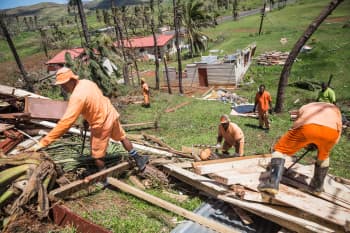
The pre-arranged system combined a regional program offering disaster insurance, a World Bank Cat DDO credit line and domestic reserve funds. Credit rating agencies upgraded Jamaica after the hurricane, with at least one citing these instruments as an important consideration.
Jamaica · Disaster Risk Financing
Multilayered and prearranged disaster risk financing in Jamaica
In Jamaica, a multi-layered, pre-arranged disaster risk financing framework, including a Cat DDO, meant that the country did not need to resort to immediate post-disaster borrowing following Hurricane Melissa in 2025. Combined with the government’s own resources, the country secured $662 million shortly after Melissa, helping fund the response.
In Practice
A Cat DDO is a contingent line of credit that provides immediate liquidity after a disaster or emergency. The World Bank’s Independent Evaluation Group noted it delivered clear time and cost savings by letting Malawi avoid slow or expensive borrowing.
Malawi · Disaster Risk Financing
Strengthening Malawi’s financial resilience to disasters
In Malawi, a pair of Cat DDOs helped ensure rapid access to financing to support the country’s COVID-19 emergency in 2020 and subsequently, a food crisis in 2024. According to IEG, this provided the government with clear time and cost savings by avoiding expensive post-disaster borrowing.
Turning Recovery Into an Opportunity to Build Back Better
Insights from Pakistan and Bhutan
In every major disaster of the past two decades, GFDRR has answered the call, supporting countries get back on their feet.
As underscored in the Sendai Framework for Disaster Risk Reduction, recovery and reconstruction offer an opportunity to build more resilient societies.
The Building Back Better report found that rebuilding stronger, faster and more inclusively could generate major benefits, totaling $173 billion per year, or 31% of well-being losses due to disasters.
From its founding, GFDRR’s support has thus been underpinned by an approach to post-disaster recovery that reduces vulnerability to future disasters and builds resilience to address physical, social, environmental, and economic vulnerabilities and shocks.
A major emphasis of GFDRR support is to ensure that emergency preparedness, multi-hazard early warning systems, anticipatory action, and pre-arranged financing all form part of a comprehensive approach to resilient recovery.
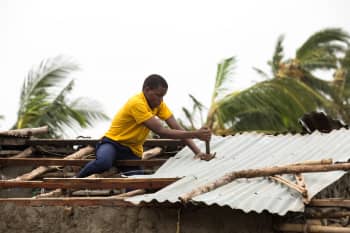
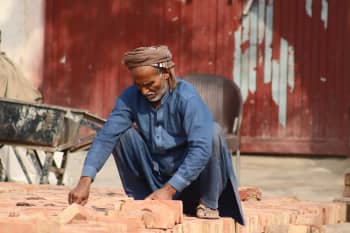
In Practice
Households receive subsidy grants in tranches tied to progress and multi-hazard resilient standards, verified locally. Where reconstruction is complete or under way, 37% of households saw women receive the grants.
Pakistan · Owner-Driven Reconstruction
Supporting owner-driven resilient housing in Pakistan
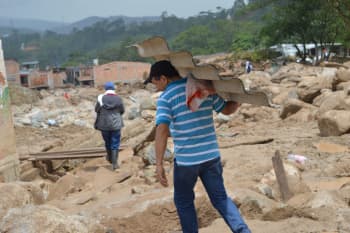
In Pakistan, over 340,000 homes have been reconstructed to be resilient following 2022 floods, which will provide a safer living environment for an estimated 1.9 million people. Households took the lead in designing and implementing the reconstruction.
In Practice
GFDRR also supported an Agrometeorological Decision Support System and mobile app that uses machine learning to generate crop advisories and weather alerts, now reaching about 43,270 people in 11 gewogs.
Bhutan · Hydromet Services
Supporting hydromet services for a resilient Bhutan
In Bhutan, the SMARTMET system, a highly advanced, state-of-the art platform for weather forecasting and dissemination has helped reduce the average preparation time for daily weather forecasts by half—down to two hours from the previous four required.
Putting Inclusive Resilience at the Center
Insights from Romania, Honduras, and Yemen
Research continues to show that women, persons with disabilities, the elderly, Indigenous Peoples, and other marginalized groups still tend to suffer disproportionally from natural hazards.
The good news is that countries are increasingly embracing inclusive approaches to disaster risk management that address the heightened vulnerability of the poor and the marginalized.
GFDRR has been a pioneer in inclusive disaster risk management, placing an emphasis on promoting opportunities, abilities, and dignity among these groups across all aspects of disaster management, recognizing that resilience outcomes are strongest when solutions are owned by the people they are designed to benefit.
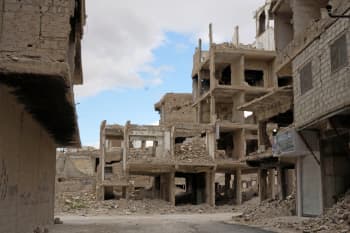
In view of the intensifying overlap between disasters and fragility, GFDRR is also supporting countries in ensuring that resilience efforts are underpinned by fragility, conflict and violence (FCV)-sensitive strategies that tackle disaster vulnerability and conflict dynamics together.
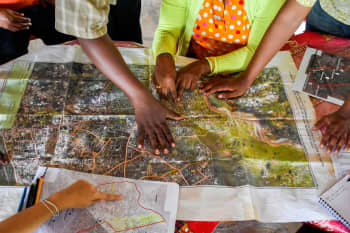
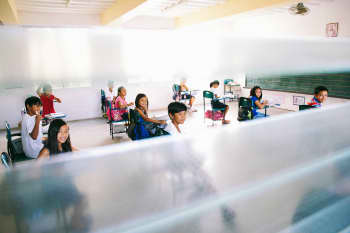
In Practice
The seven stations were rebuilt to current seismic and building codes and designed to harness renewable energy. Dormitories and sanitary facilities for women and men are a feature only now being incorporated into Romanian fire stations.
Romania · Inclusive Emergency Infrastructure
Building inclusive emergency infrastructure in Romania
In Romania, resilient fire stations serving more than 1.7 million people across seven localities now include inclusive features such as dormitories and sanitary facilities for women and men. More than 500 first responders have also been trained to respond to the needs of people with disabilities.
In Practice
School risk assessments informed raised foundations, reinforced roofing and improved drainage against floods, landslides and earthquakes, alongside bioclimatic designs for extreme weather.
Honduras · Inclusive School Design
Building resilient, inclusive Honduran schools
In Honduras, 37 resilient schools have been constructed which incorporate inclusive disaster management features such as ramps, railings, and accessible toilets. Collaboration with civil society organizations representing persons with disabilities has helped ensure that the designs meet their needs.
In Practice
Beyond direct physical damage, the assessments evaluated socioeconomic impacts such as economic losses, relocation costs and labor, since physical damage alone can understate the effects on people already vulnerable.
Yemen · Disaster–FCV Nexus
Tackling the Disaster-FCV Nexus in Yemen
In Yemen, traditional methodologies of damage and needs assessment have been adapted to account for the interactions between disasters and FCV dynamics, generating insights which have informed efforts by national and subnational authorities and development partners to support the country.
Looking Ahead
What two decades of lessons mean for the years to come
Entering its third decade amid what remains an ever changing risk landscape, GFDRR’s response is continuing to evolve too.
Emerging, new priorities
For instance, an emerging priority for the facility is extreme heat, in view of the reality that this is now one of the fastest-growing climate hazards, with heat-related deaths estimated to exceed 500,000 annually.
With interest growing in artificial intelligence for disaster management, GFDRR has been supporting efforts to ensure that the deployment of this new technology is done in a manner that is both effective and responsible.
Learning from what works
Drawing on recent evaluations, including in Senegal and Tajikistan, GFDRR will also continue to adapt and improve its approach based on growing evidence about what works and what does not.
The World Bank Group Scorecard now tracks resilience outcomes across the Group’s operations, generating data that can be used to report on the outcomes of the investments that GFDRR informs.
Partnerships that scale impact
Recognizing the power of partnerships to scale impact, what will remain constant is GFDRR’s continued commitment to work together with a wide range of institutions, including development agencies, universities and research centers. This includes collaboration around the Understanding Risk community, which supports knowledge exchange, innovation, and practical learning on disaster and climate risk management.
Public resources alone cannot close the resilience gap. GFDRR will continue to play an important role in strengthening the risk analytics, standards, and information needed to mobilize both public and private capital at scale. For example, the facility is collaborating with the International Finance Corporation (IFC) on tools and analytics that help to address a key constraint on private sector engagement in resilience, namely market and information gaps which limit the integration of disaster and climate risk into investment decisions.
Resilience and jobs
With jobs now more front and center than ever in the global development agenda, GFDRR’s mission of a world more resilient to natural hazards is as relevant and as critical as ever. A GFDRR-supported study recently found that each year, disasters and extreme heat are associated with the loss of around 90 million full‑time job equivalents worldwide.


Bridge over the Syr Darya river in Khujand, the second largest city of Tajikistan. Photo: © saiko3p via iStock
Bridge over the Syr Darya river in Khujand, the second largest city of Tajikistan. Photo: © saiko3p via iStock


Satellite image of Baku, Azerbaijan and the Caspian Sea coast captured from space. Photo: Earth from Space: Baku, Azerbaijan. Credit: contains modified Copernicus Sentinel data (2026), processed by ESA (CC BY-SA 3.0 IGO).
Satellite image of Baku, Azerbaijan and the Caspian Sea coast captured from space. Photo: Earth from Space: Baku, Azerbaijan. Credit: contains modified Copernicus Sentinel data (2026), processed by ESA (CC BY-SA 3.0 IGO).

Reflecting on lessons from what has been achieved thus far, the facility is determined to help countries in sustaining and accelerating the resilience gains of these past two decades.
The challenge for the next twenty years is scale: making resilience even more front and center in how countries plan, how infrastructure is designed, how public resources are allocated, and how private capital is mobilized. In short, we must put resilience at the forefront of how development happens.
GFDRR 20th Anniversary · 2006–2026
Knowledge for Impact
A selection of GFDRR publications from the past two decades. Select any cover to read it.
© GFDRR / World Bank
© GFDRR / World Bank